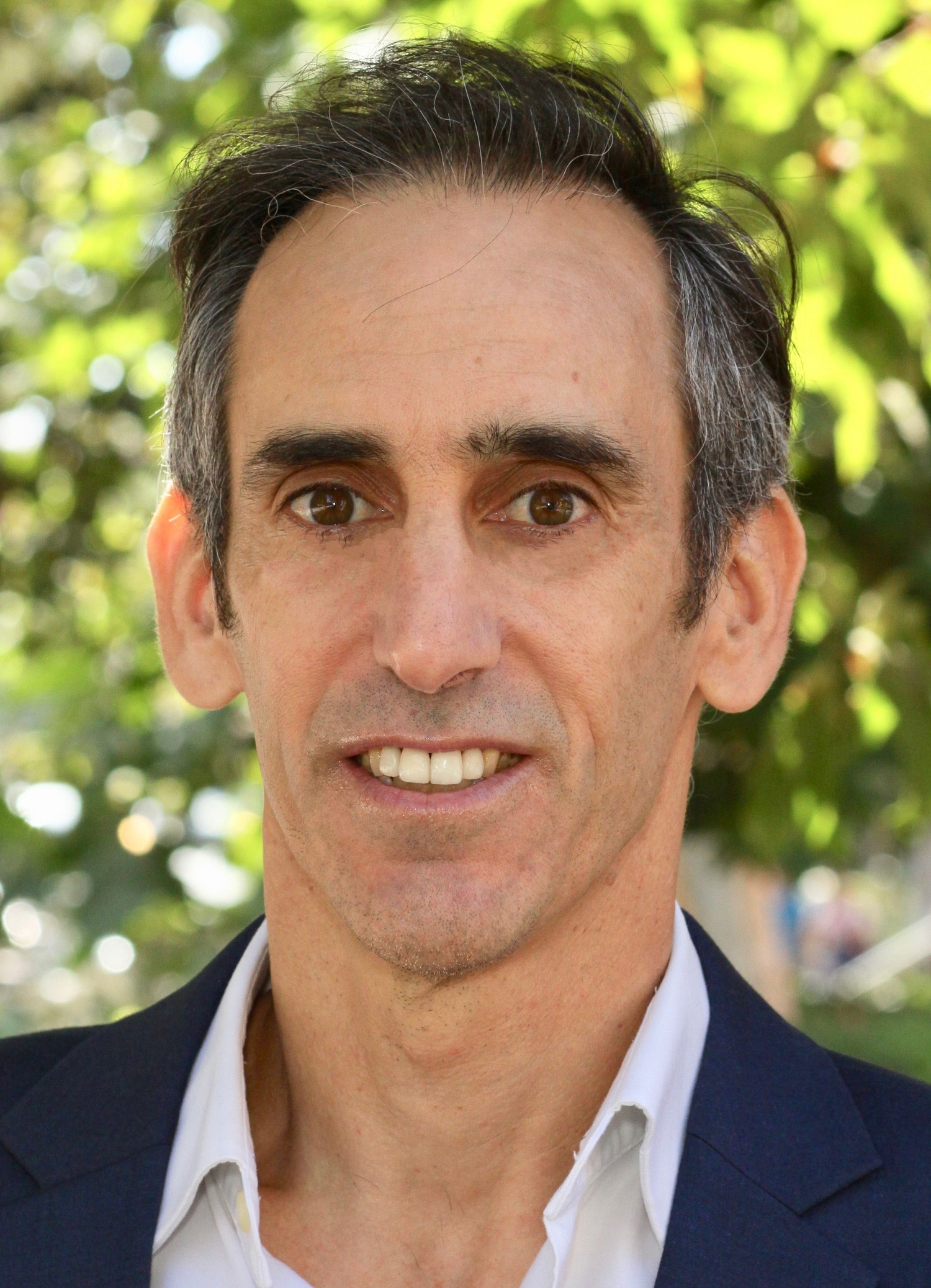
Bio
I am a Professor of Communication at the USC Annenberg School for Communication and Journalism, where I serve as Director of Doctoral Studies and Director of the Annenberg Research Network on International Communication (ARNIC).
My research examines the relationship between Internet and social inequality. I use large-scale surveys, field experiments and other quantitative methods to understand the determinants of broadband adoption and how these are linked to the mechanisms of social stratification. I have written extensively about broadband subsidy programs, online labor markets and the socio-economic impacts of broadband in developing countries. My recent research examines how residential broadband affects K-12 student achievement in the post-pandemic context.
Recent Publications
Can affordable internet increase employment opportunities for low-income workers? Evidence from the Affordable Connectivity Program
Information, Communication & Society, 1-21.
DOI PDFWelfare stigma and the take-up of consumer broadband subsidies
Journal of Information Policy, 14, 279-312.
DOI PDFUnderstanding uptake in demand-side broadband subsidy programs
Telecommunications Policy, 48(8).
DOI PDFFactors driving teacher selection on online language tutoring platforms: An experiment-based approach
Journal of Multilingual and Multicultural Development , 46, 2, 304–317.
DOI PDFThe impact of digital competence on telehealth utilization
Health Policy and Technology, 12(1).
DOI PDFA failed regulatory remedy? An empirical examination of affordable broadband plan obligations
International Journal of Communication , 16, 5912–5933.
PDFThe impact of broadband on poverty reduction in rural Ecuador
Telematics and Informatics, 75.
DOI PDFLive instruction predicts engagement in K-12 remote learning
Educational Researcher, 51, 1, 81-84.
DOI PDFWho gets access to fast broadband? Evidence from Los Angeles County
Government Information Quarterly 38, 3.
DOI PDFEmployment and the gender digital divide in Latin America: A decomposition analysis
Telecommunications Policy 45, 7.
DOI PDFPop cosmopolitanism and online language learning: Findings from a discrete choice experiment
Information Communication & Society 26,1, 1-19.
DOI PDFRecent Projects
Measuring the Effectiveness of Digital Inclusion Approaches
Funder: The Pew Trust
Co-PIs: François Bar (USC); Arpit Gupta and Elizabeth Belding (UCSB)
This multi-phase project evaluates the impact of the Affordable Connectivity Program (ACP), the Broadband Equity, Access and Deployment (BEAD) program, and other digital inclusion initiatives. We analyze program uptake, assess barriers to enrollment, and examine the effects on employment and education.
Broadband Adoption Statewide Survey
Funders: California Emerging Technology Fund (CETF) / California Department of Technology
Co-PI: François Bar (USC)
Comprehensive assessment of broadband adoption and digital equity in California, examining affordability, barriers to internet access, and digital literacy levels.
Broadband Access and Student Outcomes in the Aftermath of the COVID-19 Pandemic
Funder: USC Annenberg Dean's Research Fund
Co-PI: Jared Schachner (USC)
Could the expansion of broadband access be contributing to lower academic achievement and larger achievement gaps in the post-pandemic era? Do these impacts vary depending on student, family or school characteristics? This project examines whether pandemic-era broadband access programs have contributed to the observed declines in academic achievements levels and increases in achievement gaps in the U.S.
Reports
Publications
Books
The information lives of the poor
Ottawa: IDRC Publishing.
Comunicación móvil y desarrollo en América Latina
Barcelona: Ariel.
New TV, Old politics: The Transition to Digital TV in the US and Britain
Cambridge: Cambridge University Press.
Selected Journal Articles
Welfare stigma and the take-up of consumer broadband subsidies
Journal of Information Policy, 14, 279-312.
DOIUnderstanding uptake in demand-side broadband subsidy programs
Telecommunications Policy, 48(8).
DOIWho gets access to fast broadband? Evidence from Los Angeles County
Government Information Quarterly, 38(3).
DOI"This gig is not for women": Gender stereotyping in online hiring
Social Science Computer Review, 39(6), 1089-1107.
DOIWhy are half of Latin Americans not online? A four-country study of reasons for Internet non-adoption
International Journal of Communication, 11, 3332-3354.
Teaching
Recent Classes
- Media Economics (COMM 209)
- Global Strategy for the Communications Industry (COMM 431)
- Global Internet Governance (COMM 553)
- Quantitative Approaches to Communication (COMM 525)
Doctoral Mentorship
I advise Ph.D. students researching digital inequality, broadband policy, Internet governance, digital labor markets, and the socioeconomic impacts of communication technologies. My advisees typically pursue careers as academic researchers, policy analysts at think tanks or international organizations, or researchers focused on digital inclusion. My research uses quantitative methods to analyze large-scale datasets and evaluate policy interventions. Successful collaboration requires understanding the basics of quantitative analysis (statistics, probability, regression), programming skills in R, Stata, or Python, and interest in working with administrative data, household surveys, and Census data. If this describes your background and interests, please email me with a brief description of your research interests, academic background, and CV. USC Annenberg's Ph.D. admissions typically close in early December. Visit the admissions page for details.